






Driving Repeat Purchases with a Post-Purchase Retention Strategy
+0%
0.0x
+0%
The Client
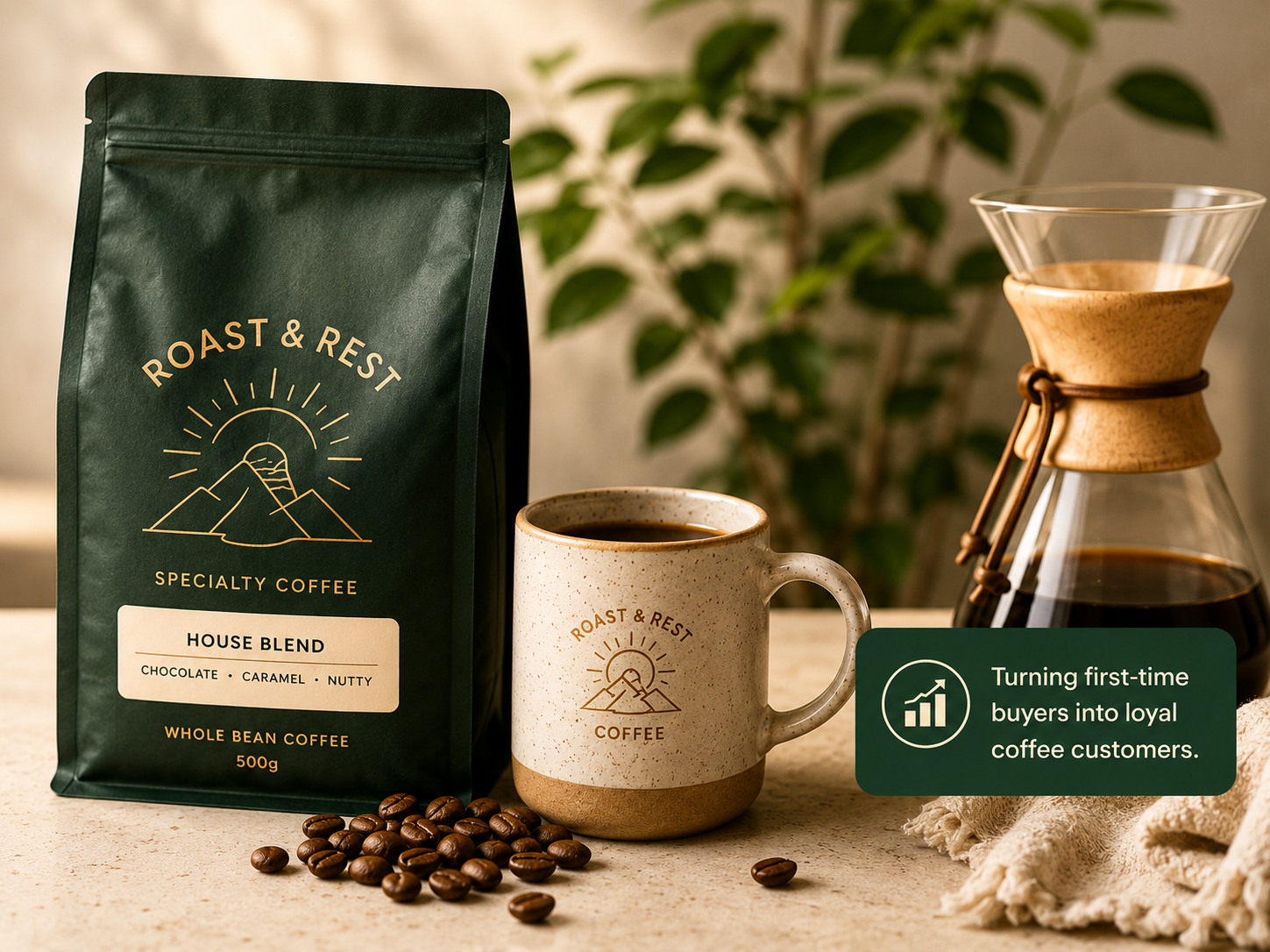
Roast & Rest is a specialty DTC coffee brand selling single-origin whole beans, espresso blends, and brewing accessories. Their customers are ritually motivated — coffee is part of a daily practice, not a one-off purchase. Replenishment cycles run every 3 to 5 weeks depending on the SKU.
Despite strong first-purchase numbers driven by paid social, 78% of first-time customers never bought again. The brand was running a paid acquisition machine that wasn't translating into LTV. Post-purchase communication was a single transactional confirmation email.
The Problem
-
There was no post-purchase lifecycle infrastructure at all. After the order confirmation, the customer fell silent until the next marketing campaign hit their inbox alongside every other subscriber.
-
The replenishment window was known (3–5 weeks by SKU) but completely ignored. Customers were running out of coffee with no prompt to reorder at the moment they were most likely to act.
-
First-time customers were being treated identically to lapsed customers in campaigns. The brand's most receptive audience — someone who just had a positive product experience — was being sent the same promotional emails as someone who hadn't opened in 90 days.
The Goal
-
Build a post-purchase flow that turns one-time buyers into repeat customers within 60 days
-
Use replenishment timing by SKU to trigger reorder prompts at the right moment
-
Increase 90-day customer LTV without increasing the paid acquisition budget
The Strategy
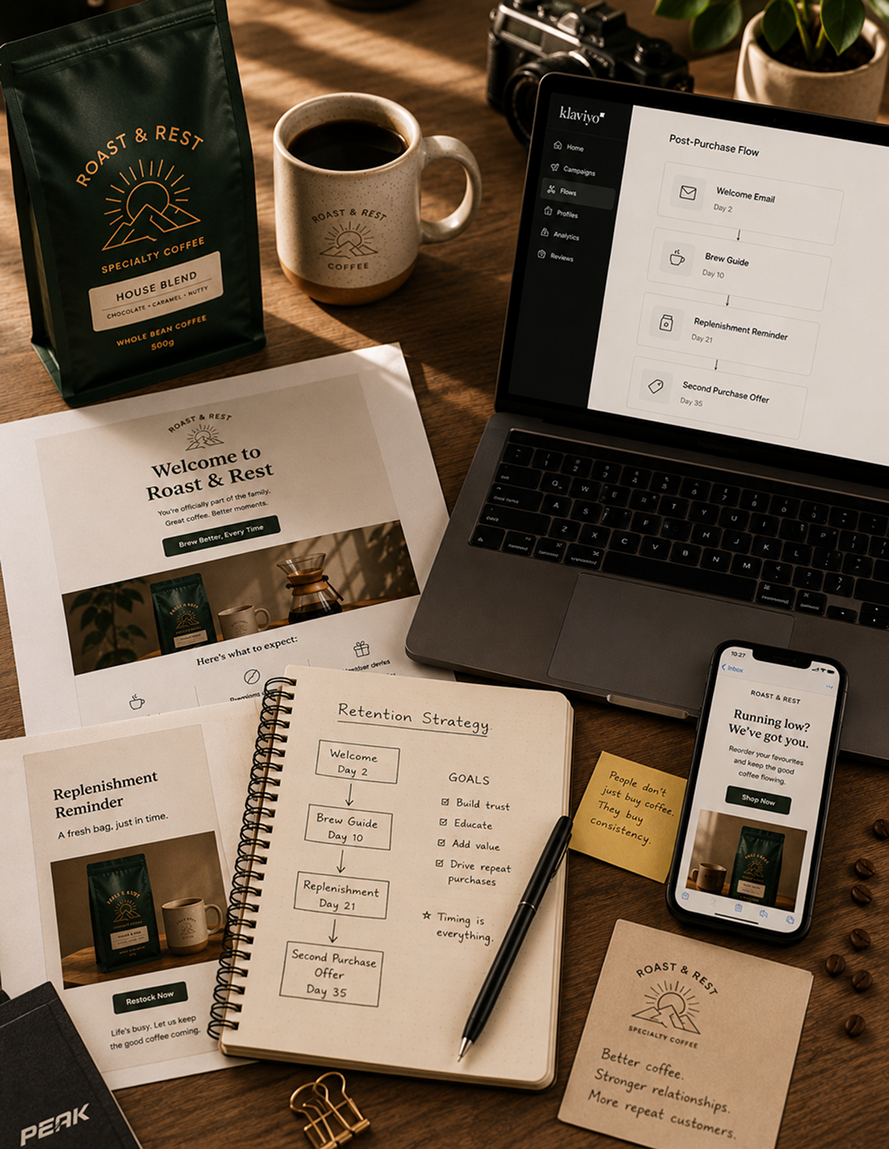
1. A staged post-purchase sequence built around the product journey
Email 1 (Day 2, post-delivery): An onboarding email specific to the purchased product. Single-origin buyers received brewing notes and origin story content. Espresso blend buyers received a grind guide and extraction tips. This email was about making the first product experience better — which is the foundation of the second purchase.
Email 2 (Day 10): A 'how's it going?' email with a genuine question about the product experience, a link to the brand's recipe content, and a soft cross-sell introduction (e.g. 'Pairs well with' featuring a complementary SKU at a different price point).
Email 3 (Day 21–28, SKU-triggered): The replenishment prompt, timed to arrive when the customer was likely running low based on the SKU purchased. No discount on this email — the replenishment prompt alone was the conversion lever, since the customer already knew and liked the product.
Email 4 (Day 35, non-repurchasers only): A loyalty incentive — a 'second order discount' positioned as a thank-you for being a first-time customer, not as a win-back offer. The framing mattered: customers who hadn't repurchased yet were offered a reward, not a plea.
2. SKU-level replenishment timing
Products were mapped to replenishment windows based on size and average consumption rate: 250g bags at 21 days, 500g bags at 35 days, 1kg bags at 60 days. Email 3 triggered based on the SKU in the original order, not a fixed calendar. This meant the reorder prompt arrived when the customer was genuinely running low — a natural conversion window rather than an arbitrary sequence date.
3. Cross-sell architecture, not upsell pressure
The post-purchase flow was designed to introduce the broader product range progressively, not to push an upgrade immediately after purchase. A customer who bought a single-origin bag on day 1 saw an accessory cross-sell on day 10 and a different bean variety on their replenishment email. By the time Email 4 arrived, the customer had been exposed to the full range through product context, not promotional pressure.
The Results
| Metric | Before | After |
|---|---|---|
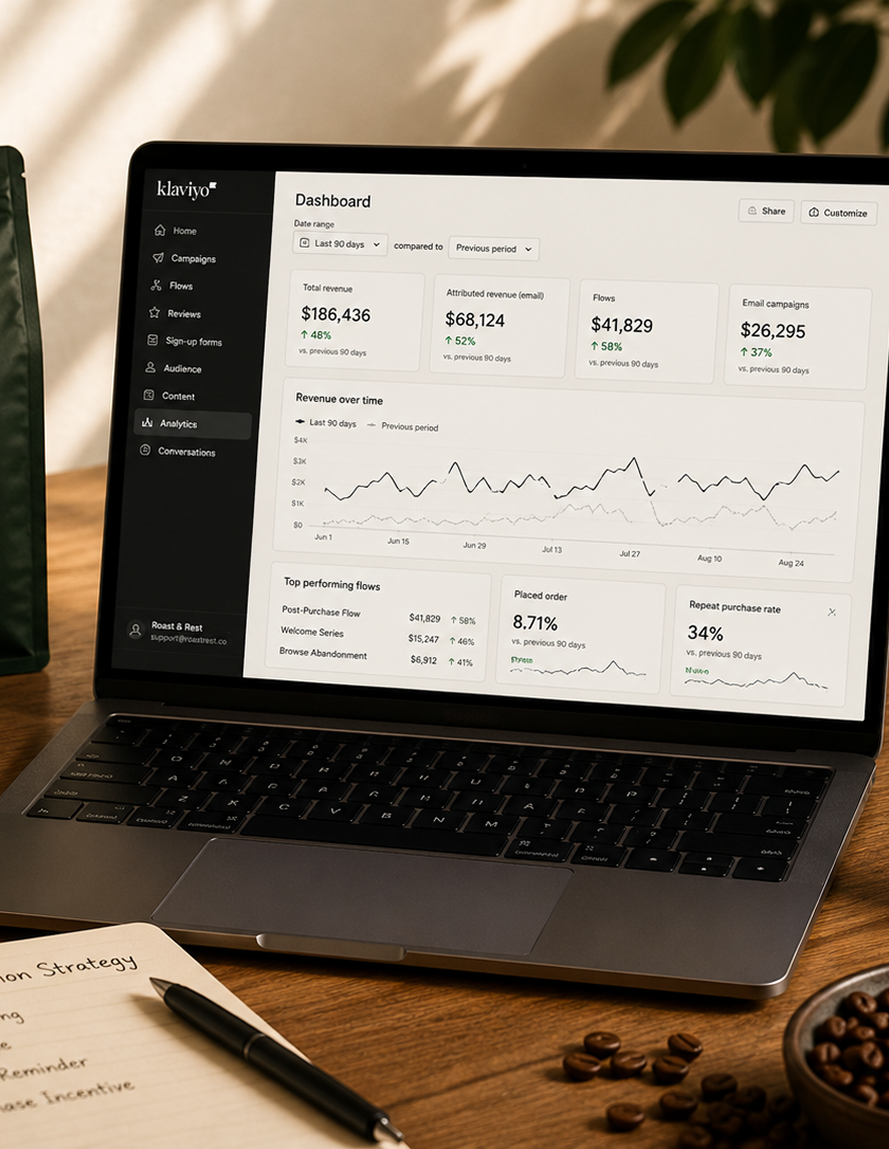
| Repeat Purchase Rate (90 days) | 22% | 34% |
| Second-Purchase Conversion | N/A | 22% |
| Average LTV at 90 Days | Baseline | +1.4x |
| Replenishment Email CVR | No flow | 14% |
| Cross-sell Revenue (Flow) | None | 18% of flow revenue |
Repeat purchase rate within 90 days went from 22% to 34%. The replenishment prompt alone — with no discount — converted at 14%, demonstrating that timing is a more powerful conversion lever than incentives when the product experience is strong.
The Takeaway
The post-purchase window is the highest-intent moment in the customer lifecycle. A customer who just received and used a product they liked is more likely to repurchase than any cold or warm prospect in the acquisition funnel. The brands that lose on LTV are the ones treating post-purchase as a confirmation email, not a relationship-building sequence.